Hair loss is something many of us face at different stages of life, no matter your age or gender. By the time you’re 30, about 25% of men and 12% of women notice visible thinning, which can affect your confidence and self-esteem. But with help of hair transplantation you can regain not only your hair, but also your confidence.
In this procedure, healthy hair follicles are taken from your donor area and carefully placed in the thinning or bald spots, giving you a long-lasting solution to hair loss. Over the years, hair transplant techniques have improved a lot.
From the old punch grafting methods in the 1930s to modern hair transplant techniques the main focus has always been on giving you natural-looking results with minimal discomfort.
If you’re confused about how many types of hair transplant procedures there are, which one might suit you best, or how much it could cost in Mumbai, let’s break it down and discuss everything you need to know.
A hair transplant is a surgical procedure used to restore your hair in areas affected by baldness or thinning. In this process, healthy hair follicles are taken from the back or sides of the scalp (donor area) and implanted into bald or thinning regions (recipient area). Over time, the transplanted hair grows naturally, creating a fuller and more youthful appearance.
The procedure is performed under local anesthesia making it safe and relatively painless. Since the transplanted follicles are resistant to hair fall, the results are long-lasting and natural-looking. Hair transplants are suitable for both men and women struggling with receding hairlines, pattern baldness, or excessive hair loss.
By restoring not just hair but also confidence, a hair transplant surgery is considered one of the most effective and permanent solutions for hair loss today.
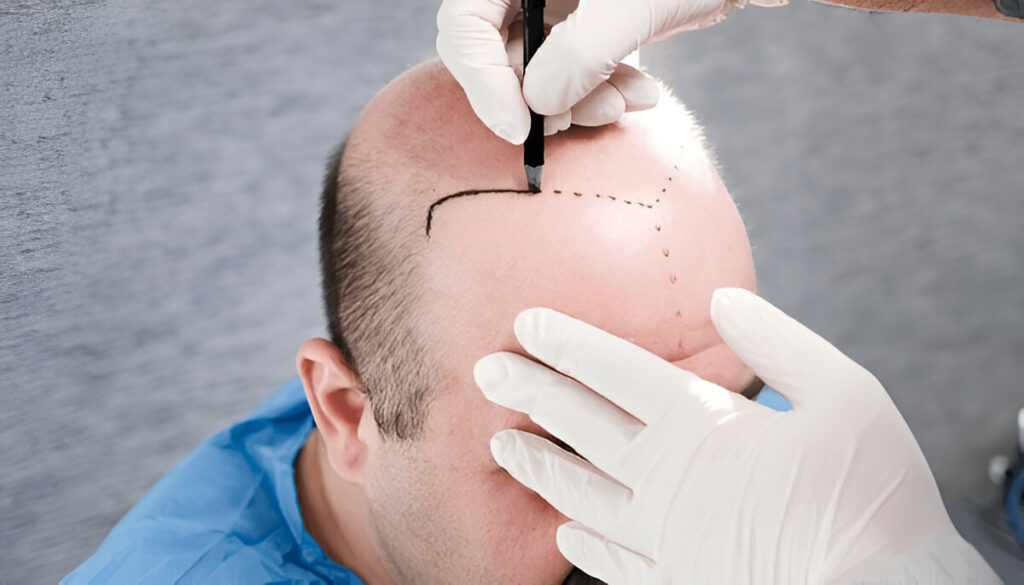
In my years of experience working closely with hair loss patients, I’ve seen how hair transplantation has completely transformed. What once had limited options has now evolved into advanced, reliable techniques that deliver natural results. Advanced methods like FUT, FUE, and DHI offer different approaches to hair restoration, each with its own process, benefits, limitations, and customized as per your requirement.
a. FUT (Follicular Unit Transplantation)
FUT, often referred to as the “strip method,” involves removing a strip of scalp from the donor area, typically the back of the head. This strip is then dissected into individual follicular units under a microscope. These units are subsequently implanted into the balding or thinning hair areas of the scalp.
Advantages:
- Suitable for Large Areas: FUT is ideal for you if you requiring transplantation over extensive balding areas.
- Shorter Surgery Time: Since multiple grafts are prepared simultaneously, the procedure can be completed relatively quickly.
Disadvantages:
- Linear Scar: The removal of the scalp strip results in a linear scar, which may be visible if the hair is cut short.
- Longer Recovery: You may experience a longer healing period and potential discomfort in the donor area.
b. FUE (Follicular Unit Extraction)
FUE involves extracting individual hair follicles directly from the donor area using a specialized punch tool. These follicles are then implanted into the recipient area. The procedure is minimally invasive and doesn’t require stitches.
Advantages:
- Minimal Scarring: FUE leaves tiny, dot-like scars that are less noticeable, allowing for shorter hairstyles.
- Quicker Healing: The absence of stitches leads to faster recovery and less postoperative discomfort.
Disadvantages:
- Longer Procedure Time: Extracting individual follicles is time-consuming, making the procedure longer than FUT.
- May Require Shaving: The donor area often needs to be shaved, which might be a concern for you.
c. DHI (Direct Hair Implantation)
DHI hair transplant is an advanced version of FUE hair transplant. Hair follicles are extracted individually and immediately implanted into the recipient area using a specialized tool called a Choi implanter pen. This method allows for precise control over the depth, direction, and angle of each implant
Advantages:
- No Need to Shave: DHI often doesn’t require shaving the recipient area, making it more discreet
- Precise Implantation: The use of the Choi pen allows for accurate placement, resulting in a natural-looking hairline.
Disadvantages:
- Higher Cost: DHI hair transplant is generally more expensive due to the specialized equipment and expertise required.
- Requires Specialized Equipment: Not all clinics offer DHI, as it necessitates specific tools and trained professionals.
When considering hair restoration options, understanding the differences between Follicular Unit Extraction (FUE) and Follicular Unit Transplantation (FUT) is crucial. Both techniques aim to address hair loss effectively, but they differ in procedure, recovery, cost, and suitability.
When it comes to hair transplantation choosing the right technique plays a very important role in achieving natural results and a comfortable recovery. In my experience I’ve seen how factors like scarring, downtime, cost, and daily lifestyle significantly influence whether FUE, FUT, or DHI is the best fit. Understanding these aspects helps you make informed decisions and achieve results that truly match their hair goals.
| Feature | FUE (Follicular Unit Extraction) | FUT (Follicular Unit Transplantation) | DHI (Direct Hair Implantation) |
| Scarring | Tiny, dot-like scars; minimally visible even with short hair | Linear scar at donor site; may be noticeable with short hairstyles | Minimal dot-like scars; no visible linear scar |
| Recovery Time | Faster recovery; most return to work within a few days | Longer recovery; typically 10–14 days before resuming normal activities | Very fast recovery; most resume normal activities in 2–3 days |
| Cost | Generally more expensive due to labor-intensive procedure | More cost-effective, especially for larger graft requirements | Usually higher than FUE; advanced technique with precise implantation |
| Hair Loss Suitability | Ideal for mild to moderate hair loss; suitable for short hair | Best for extensive hair loss; suitable for longer hairstyles | Effective for mild to moderate hair loss; ideal for precise hairline restoration |
| Patient Suitability | Suitable for active lifestyles; minimal downtime | Requires sufficient scalp laxity; longer downtime | Suitable for you if you’re seeking minimal trauma and high precision |
DHI is a newer technique where extracted follicles are implanted directly into the scalp using a specialized pen, allowing for greater density and precise hairline design. It’s minimally invasive with fast recovery, ideal for you if you’re wanting natural results with less downtime.
By knowing this deference’s on each types of hair transplant will help you to regain your confidence, not just only hair but you should take care of your skin as well.
Reveal Your Best Skin Today
Discover the magic of HydraFacial for deep cleansing, hydration, and instant glow in just one session. Treat your skin with the care it deserves.
Over the years, I’ve seen Mumbai grow into one of India’s most trusted destinations for high-quality and affordable hair transplants. With advanced techniques like FUE, FUT, and DHI, the city now attracts patients not only from across India but also from abroad as well. Clinics such as RSB Wellness combine experienced surgeons, modern technology, and ethical care to deliver safe, natural-looking results.
Hair transplant costs in Mumbai depend on factors like the technique used, number of grafts, surgeon’s experience, and clinic facilities. At RSB Wellness, treatments start at just ₹29,999 (T&C apply), making it one of the most cost-effective options without compromising quality.
The city’s combination of affordability, advanced technology, and professional care has also made it a hotspot for medical tourism, helping you to regain confidence while accessing world-class hair restoration services.
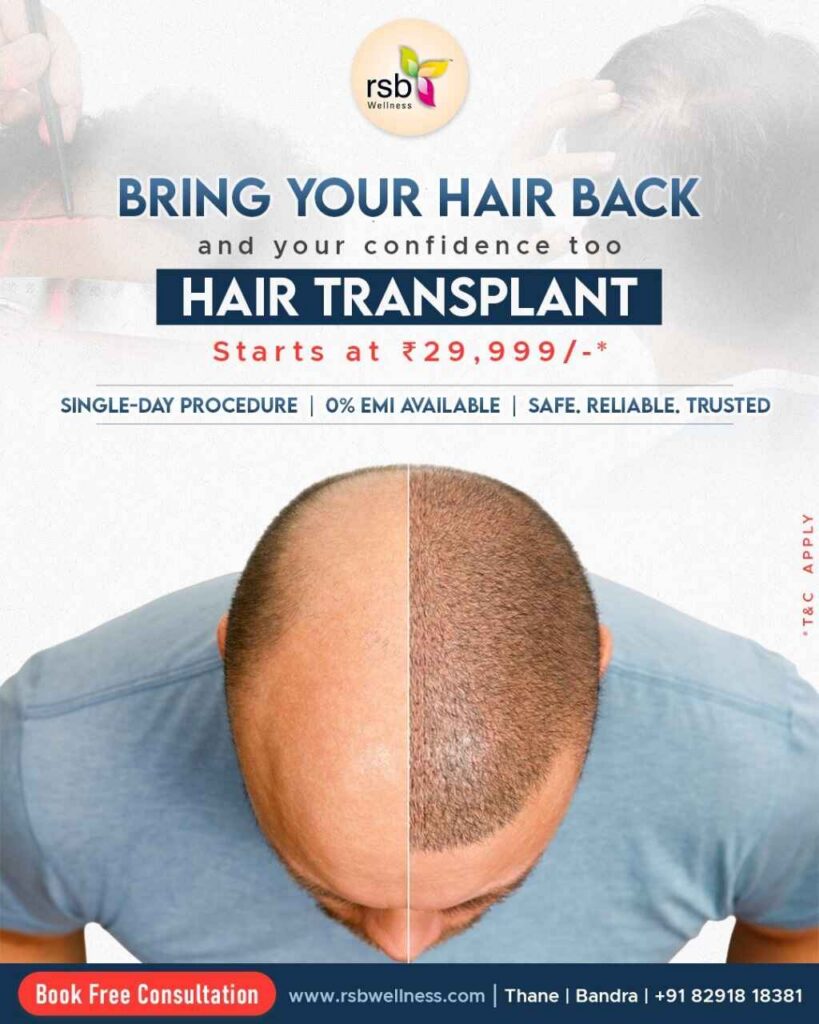
Hair transplant is often seen as a long-term solution for hair loss, offering natural-looking and permanent results to you. While the cost and recovery may vary for everyone, many people consider it a worthy investment for restoring confidence and appearance.
However, whether it’s the right choice depends on your hair loss stage, expectations, and budget. If you’re still unsure, check out our detailed guide on this topic: Is a Hair Transplant Worth It?
In my years of experience i can say that hair transplantation is never a one-size-fits-all procedure. Choosing between FUE, FUT, or DHI depends on personal factors such as the extent of hair loss, budget, lifestyle, and expected results. With the right expert guidance, you can make right decisions that lead to natural outcomes, long-term success, and genuine satisfaction.
Key Factors to Consider:
Personalized Treatment Plans: Custom plans as per your requirement to ensure better results and long-term hair growth.
Extent of Hair Loss: More advanced baldness may require FUT for maximum grafts in one session, while mild to moderate loss may suit FUE or DHI.
Budget: FUT is generally more affordable than FUE or DHI. DHI is the most expensive due to its precision and advanced tools.
Desired Results: For higher density and natural appearance, DHI or FUE may be preferred.
Consultation with Experts: A qualified surgeon can evaluate scalp health, hair quality, and expectations before recommending the best technique.
Hair Transplant
Transform your look with expert Hair Transplant treatment. Natural results, minimal downtime
Hair loss can affect anyone no matter your age and gender but i can say form my years of experience, modern treatments have truly transformed how confidently we can address it today. Advanced hair transplant techniques like FUT, FUE, and DHI now make it possible to restore natural-looking hair safely and effectively, based on an individual’s stage of hair loss and expectations
Each method has its own advantages FUT is better for covering large bald areas, FUE provides quicker healing with minimal scarring, while DHI ensures precise hairline design and natural density. The choice ultimately depends on personal goals, budget, and medical advice.
By consulting a qualified surgeon, you can understand which procedure will suit you the best and ensure long-lasting results. With the right approach and proper aftercare, hair transplant not only restores hair but also brings back lost confidence. Choosing wisely among the different types of hair transplant will help you achieve fuller hair and a youthful appearance for years to come.
-
Is a hair transplant permanent?
Yes, a hair transplant is generally permanent because the donor hair is genetically resistant to baldness. These hairs continue to grow in the transplanted area for many years, often for life.
-
Can women also undergo a hair transplant?
Yes, women can get hair transplants if they have a stable hair loss pattern and sufficient donor hair. The results can be natural-looking and highly effective when done by an experienced surgeon.
-
How is a hair transplant done?
A hair transplant is done by taking healthy hair follicles from the back or sides of your scalp (donor area) and carefully implanting them into thinning or bald areas, restoring natural hair growth with long-lasting results.
-
What are the different types of hair transplant?
There are mainly three types of transplant techniques: FUT (Follicular Unit Transplantation), FUE (Follicular Unit Extraction), and DHI (Direct Hair Implantation). Each method differs in procedure, recovery, cost, and results, depending on your hair loss needs.
-
What is DHI?
Direct Hair Implantation (DHI) is an advanced method where hair follicles are directly implanted using a specialized pen tool, without creating prior incisions. It ensures higher precision, natural results, faster recovery, and minimal scarring.
-
What is FUE?
Follicular Unit Extraction (FUE) involves individually extracting healthy hair follicles from the donor area and transplanting them into thinning or bald regions. It’s minimally invasive, leaves tiny dot scars, and offers faster healing with natural-looking results.
-
What is FUT?
Follicular Unit Transplantation (FUT) involves removing a strip of scalp from the donor area, dissecting it into follicular units, and transplanting them. Though slightly more invasive, it’s effective for covering larger bald areas with dense results.